
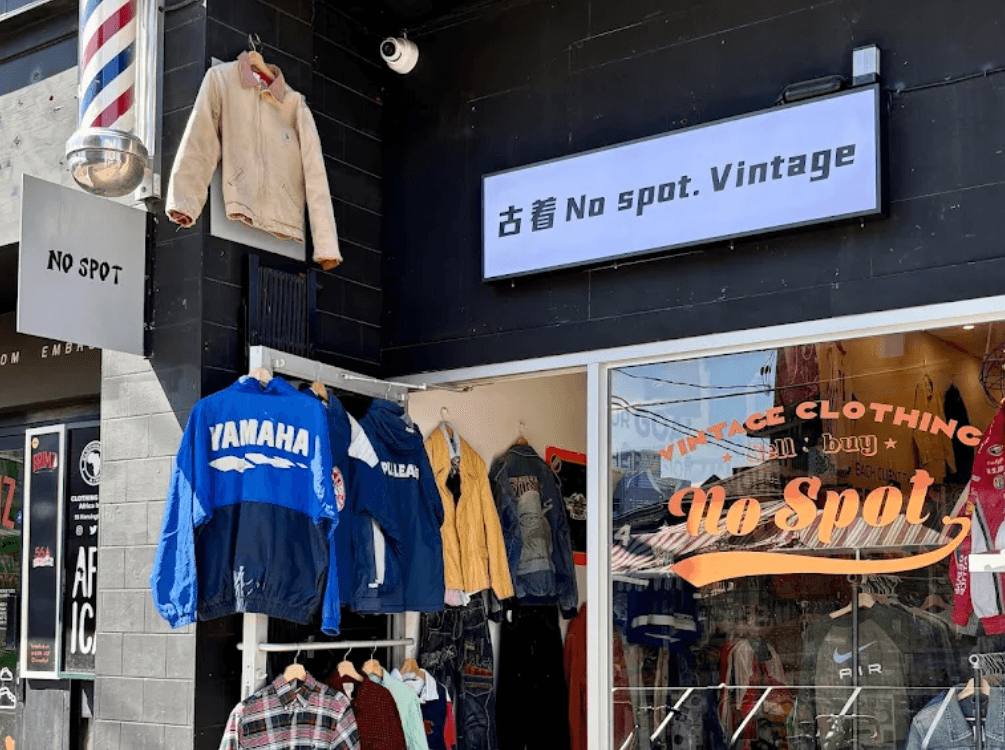
What You Need to Know
Immediate omnichannel success: No Spot Vintage generated online revenue equivalent to 10% of in-store sales within just two months of opening their physical store.
Social-first strategy: They leveraged their younger, social media-savvy customer base by pushing every in-store customer to their online platforms.
Wishlist psychology: Instead of listing all inventory online, they focused on attention-grabbing, one-of-a-kind pieces that customers would save and share.
Data intelligence advantage: Using SECND's platform, they gained insights into trending categories like NASCAR jackets and Japanese stitch-ons, despite selling unique vintage pieces.
Time liberation: AI freed them from manual cross-posting tasks, allowing focus on curation and brand building.
Born omnichannel: Rather than retrofitting digital onto physical retail, they designed both experiences to work together from day one.
Most vintage retailers follow the same playbook. Build physical presence first. Establish local customer base. Then, maybe after a few years, consider e-commerce. No Spot Vintage threw that playbook in the trash.
Within two months of opening their Kensington storefront, they were generating online revenue equivalent to 10% of their in-store sales across Depop and Grailed. While other vintage shops spend years figuring out how to translate their physical presence online, No Spot built omnichannel into their DNA from day one.
We investigated how they pulled this off. The answer reveals something fundamental about modern retail timing.
Curating for Wishlist Psychology
Here's where most vintage retailers get it wrong. They try to sell everything they have online. No Spot focuses on pieces that grab attention first.
"Attention grabbing one of a kind pieces that will sit in your wishlist paired with other pieces and the infrastructure to manage it all."
They're not just selling vintage clothing. They're curating for wishlist psychology.
This approach makes sense when you consider the broader market dynamics. The global secondhand apparel market is growing three times faster than overall apparel retail. Platforms like Grailed saw 180% year-over-year growth while Depop increased close to 90% in December 2024 alone.
No Spot positioned themselves perfectly for this wave. But positioning alone doesn't explain their execution speed.

Wishlist psychology in action: curating pieces that customers save and share.
The Data Intelligence Breakthrough
Vintage retail has always faced a unique challenge. How do you get business intelligence on one-of-one pieces? Traditional retail can track which blue jeans sell best. Vintage retailers are flying blind because every item is unique.
"You gotta buy online to understand online," No Spot's team explains. "The easiest thing is just tracking what does well and replicating it, like social media. But it's hard to get those insights on one of one pieces."
This is where SECND's platform changed the game.
Instead of treating each vintage piece as completely unique, SECND recognizes patterns. A 1990s Tommy Hilfiger windbreaker and a 1995 Tommy Sport jacket might be described differently, but the platform understands they're part of the same trend wave.
"We understand trends, brands, different lines or designs, even if their titles or edge details don't match. Everything runs through data."
From Blind Sourcing to Strategic Curation
No Spot didn't need extensive guidance on what to source. They already had strong curation instincts. But SECND gave them something more valuable: cross-platform insights on performance and best-selling categories like NASCAR racing jackets and Japanese stitch-ons.
This data didn't change what No Spot sourced. It confirmed their instincts and gave them confidence to double down on winners.
The real value proposition runs deeper than insights. "SECND is here to automate and deliver insights so owners can focus more on the curation. We don't tell you what to source. But we give you more time and business intelligence to do what you do best as a shopowner: building your brand and finding the best deals for your customers and the latest heat."

Data-driven insights confirming curation instincts and revealing trending categories.
The Time Liberation Factor
Before platforms like SECND, vintage retailers faced an impossible choice. Spend time on manual cross-posting and performance tracking, or focus on curation and customer relationships.
No Spot solved this by automating the tedious parts. Instead of spending hours managing multiple platforms, they could focus on what they do best: finding incredible pieces and building their brand.
This time liberation enabled their rapid omnichannel success. While competitors were stuck managing logistics, No Spot was building relationships and sourcing better inventory.
The Broader Retail Shift
No Spot's success represents something bigger than one shop's smart strategy. Traditional retail wisdom says establish physical presence first, then expand online. But modern consumers expect omnichannel experiences from day one.
91% of consumers prefer brands that offer seamless omnichannel experiences, yet only 56% of retailers successfully deliver this.
No Spot was born omnichannel. They didn't retrofit digital capabilities onto a physical store. They designed both experiences to work together from opening day.
This approach will become standard for new retailers. The question isn't whether to go omnichannel, but how quickly you can execute it.
No Spot proved that with the right platform and strategy, the answer is immediately.
Curious what the broader data looks like across vintage operations—including why 89% of customers never return and how two distinct customer bases hide under one storefront? See the vintage retail data nobody wants to see.
Ready to build omnichannel success from day one? Download our omnichannel playbook or book a strategy session to see how SECND can accelerate your online sales. Learn from more success stories on our blog.
The Social Media Advantage
No Spot's secret weapon wasn't inventory or location. It was understanding their audience.
"They're more social media affluent and have a younger store audience," explains the team behind their rapid expansion. "But most importantly, they understand how to push people to their socials and how to convert from brand aesthetic to online shop."
This conversion happens at the most basic level. Every checkout includes a social media push. Every customer interaction becomes a potential online connection.
What seems like basic customer service actually drives exponential reach. Friends share the shop organically. No Spot posts reels that feel native to the platform. Their products integrate naturally into the social commerce ecosystem.
The key insight: their platforms match their store vibe and customer profile perfectly.
No Spot's social-first approach: converting every in-store interaction into online connections.